
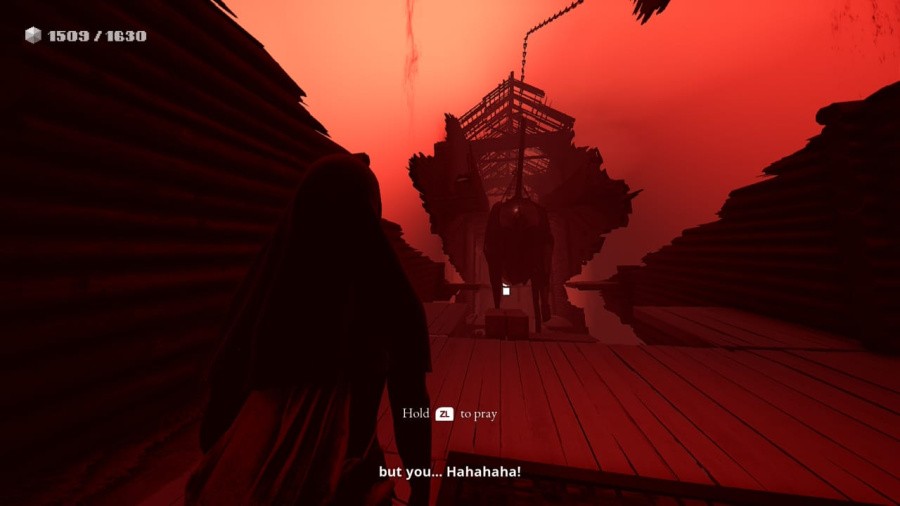
There’s a model of Indika I’d name probably the most singularly audacious narrative exploration video games in current reminiscence, a daring title that defies simple classification with its surrealist thrives, cinematic artwork course, and cynical inversion of acquainted online game mechanics. Sadly, the Nintendo Change model isn’t it.
Half non secular tragicomedy, half psychological fever-dream, builders Odd Meter ship what is actually a playable disaster of religion, one shackled to a deeply compromised port so crash-prone and visually mangled at instances that it’s very laborious to advocate in its present state, even because the story beneath all of it is nothing wanting compelling.
Between lacking belongings, localisation glitches, closely compromised cutscene high quality, and repeated crashes, this port undermines the very issues that make Indika particular. Certainly, you can be forgiven for desirous to brute-force your approach by its five-hour runtime regardless of its efficiency points simply to see this heady, thought-provoking story by to its conclusion.
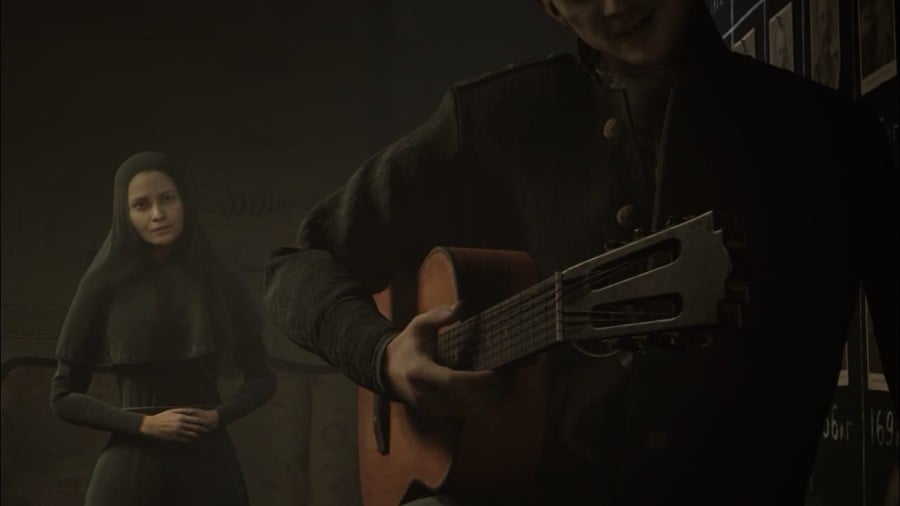
The sport places you in command of Indika, a meek younger nun eking out a bleak existence in a frigid Tsarist-era Russian convent. She’s loathed by the opposite sisters and handled like a workhorse. As you mundanely haul potatoes and fetch water, a sardonic disembodied voice begins to chime in, one which the sport’s personal advertising and marketing nudges you to interpret because the satan himself.
Whether or not this power — a tormentor and commentator who pries at her doubts, teasing her with sexual temptation and needling the hollowness of her performative piety — is a literal demon or just her personal intrusive ideas is left to you to resolve. In any case, Indika’s non secular reckoning eschews shallow blasphemy for its personal sake and has actual philosophical heft.
The sport’s writing is sharper than you may initially anticipate, with characters that will not be misplaced in a Dostoyevsky novel pondering the uneasy nature of free will, the hierarchies of sin, and the mysteries of the human soul. Indika likewise revels in weaponising tedious gameplay as a punchline in its critique of the constructions that form perception itself.
Second-to-moment play includes mild environmental puzzles which might be not often difficult. You’ll push a secure on wheels to tilt a crumbling constructing so a piano slides into place beneath a window to create a path, function equipment in a fish manufacturing facility and different industrial locales, and manipulate walkways by holding the prayer button to make bridges seem or vanish.
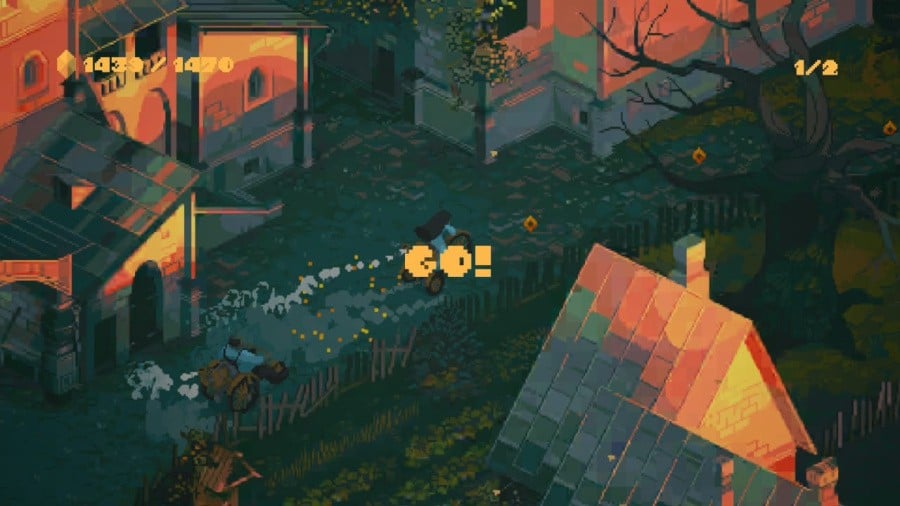
There are additionally a handful of flashback sequences rendered in pixel artwork that operate as playable recollections of Indika’s life earlier than the convent. These segments embrace minigame challenges that vary from isometric bike racing and small platforming challenges in a ‘repeat till you get the timing proper’ format. However the controls don’t really feel intuitive and take a second to regulate to.
These sections are essentially the most overtly video-gamey components of Indika, and the tonal whiplash between the colorful, retro-styled recollections and solemn 3D hyper-realism of the primary marketing campaign and its staid ‘strolling simulator’ segments — gradual backwards and forwards traversal between a nicely and a crate, turning a wheezing crank with an ungainly analogue rotation — are by design.
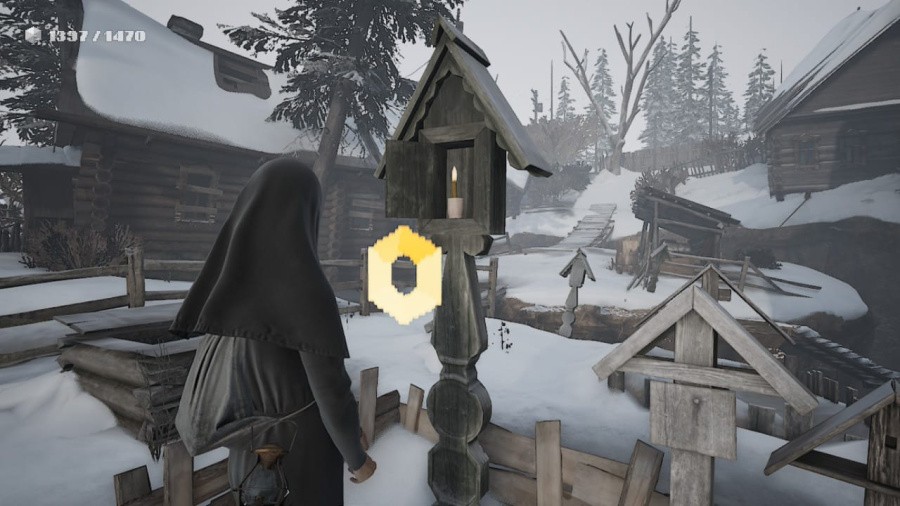
Layered on prime of this can be a intentionally ineffective ability tree that ranges up disgrace, grief, guilt, repentance, and so forth with factors gained from pious issues equivalent to lighting candles to light up non secular icons, discovering relics, and dutifully finishing chores. At one level, the sport straight-up tells you to not hassle amassing factors as a result of they’re pointless.
Nobody who performs Indika will rave about its gameplay, however that didn’t cease me from having fun with being in its world. As you trek between convent, village, and industrial websites, you hear snow crunch underfoot, howling wind, distant gunshots, and a lady sobbing someplace out of sight. Interiors of deserted peasant properties are richly detailed, illuminated in flickering candlelight.
The soundtrack is strikingly anachronistic, weaving lo-fi digital atmosphere with flashes of club-tinged breakbeats and synth textures that collide with droning Orthodox chant. There are voiceovers in each British English and Russian. Enjoying with a Russian voiceover and English subtitles felt just like the extra immersive choice to me, although each languages are well-performed.
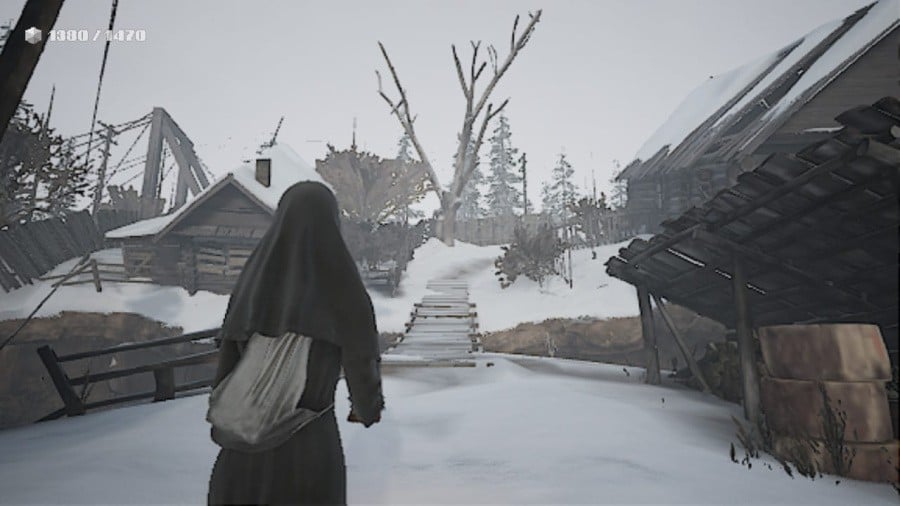
That mentioned, if in case you have entry to a different platform, play it there. Whether or not working on unique Change {hardware} or a Change 2, this model is solely a large number. Throughout my playthrough, I skilled 4 laborious crashes that will generally dump me again at the beginning of a degree, and the sport typically reloaded in a damaged state the place your companion character and their dialogue would fail to spawn, leaving solely their subtitles on display.
There have been additionally sections the place subtitles failed to point out up completely. Scenes that beforehand featured music would reload in complete silence whereas NPCs continued to bounce. Between transitions from gameplay to cutscenes, the display would constantly flash odd glitch frames for a cut up second; this was not intentional stylisation however a persistent artifacting error.
Visually, the Change model is critically compromised, and evaluating key scenes to footage from different variations is disheartening. Throughout commonplace gameplay, environments are serviceable if a bit of smooth, however the cutscenes — essential for a recreation this cinematic — typically appear like a smudged and muddy PS2 recreation. There are total visible motifs which might be completely misplaced on Change.
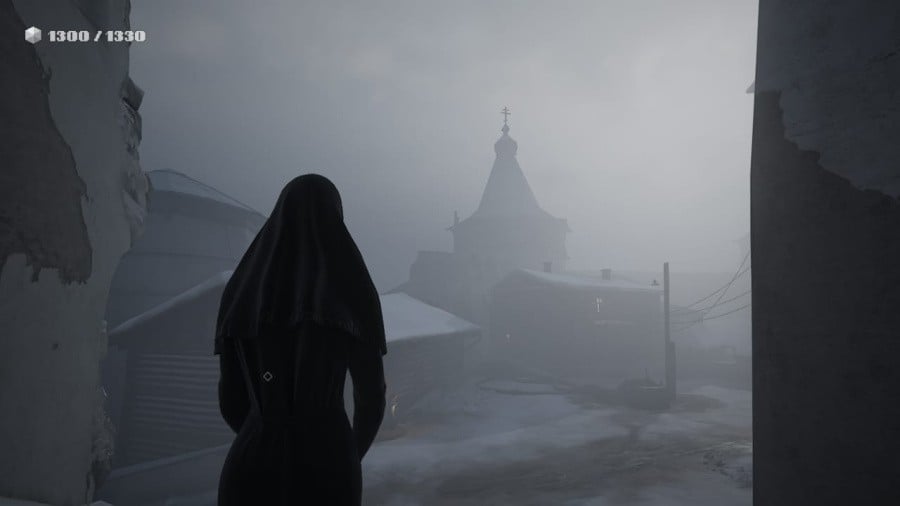
The sport pixelates shadows throughout a sure intimate second in a callback to Indika’s previous, however this might barely be discerned because of the poor decision and distinction. In at the least one sequence, the lighting was so darkish on Change {that a} main visible beat initially went unnoticed. Elsewhere, over-bright lighting makes an unsettling character close-up endure badly.
Visuals take an much more dramatic hit in handheld mode with a important drop in constancy that’s laborious to miss. The hand held picture is so smooth and low-res that environmental particulars smear into vague muddy gradients, leaving scenes that always resemble an early-2000s recreation struggling below heavy post-processing.

