
Poland-based studio Reikon Video games has solely been round since 2014, however in its decade of improvement, it has made a reputation for itself creating fashionable, action-forward cyberpunk video games. Its debut, 2017’s Ruiner, was itself an excellent isometric shooter, however in hindsight, it was a glance towards the studio’s future and its second recreation: Metallic Eden. Like Ruiner, Metallic Eden is a futuristic neon-lit shooter set in a cyberpunk dystopia, however this time, from a first-person perspective. It blends wonderful first-person gunplay with motion tech that turns town of Moebius right into a parkour playground, and the ensuing gameplay is hyper-fast, frantic, and enjoyable. Although its narrative and degree design generally get in the way in which of that, the whole package deal continues to be a setpiece-filled motion romp and one of many 12 months’s finest shooters.
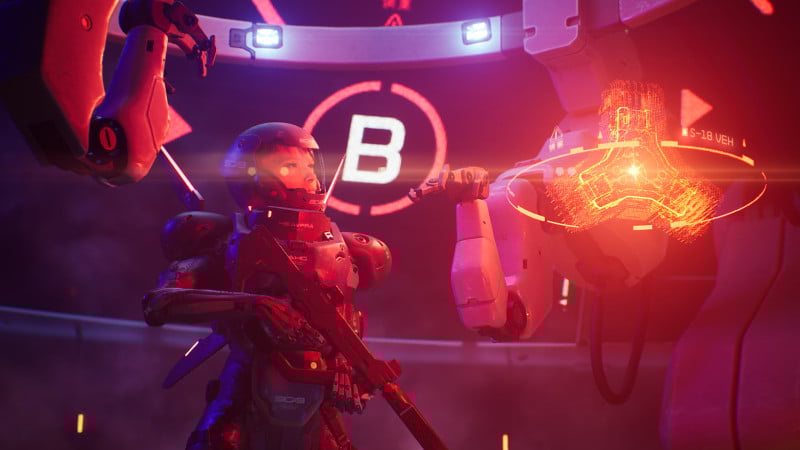
On this planet of Metallic Eden, Hyper Models are disposable androids able to inhuman feats due to a cyberpowered armor that permits them to sprint, grapple, jetpack, and wall-run by nearly any atmosphere, and every unit is skilled for cybernetic warfare, with a seven-gun arsenal in tow. You play as Aska, a particular Hyper Unit tasked with saving the residents of Moebius from imminent destruction. That leads her by derelict factories, deserts, mining amenities, and into the realms of Engineers, who possess Cores she desperately wants for her mission. It’s a strong basis for the 7-hour journey, and a voice-in-your-comms doesn’t allow you to neglect about it, generally to the detriment of the sport.
Whereas the voice appearing is nice, if you’re not engaged in multi-wave area battles, there’s nearly at all times a voice in your ear discussing their motives, their historical past, and their needs, all by sci-fi jargon that ultimately bounced proper off of me. Reikon is trying to inform an enriched narrative, and I get pleasure from how a lot the studio focuses on strolling gamers by Aska’s journey to save lots of Moebius, which has been threatened with what is actually a ticking time bomb; its finale leaves lots to be desired, however I nonetheless discovered the general story to be a commendable effort from Reikon. Its largest flaw, although, is how usually it will get in the way in which of the actual star of Metallic Eden: the motion.
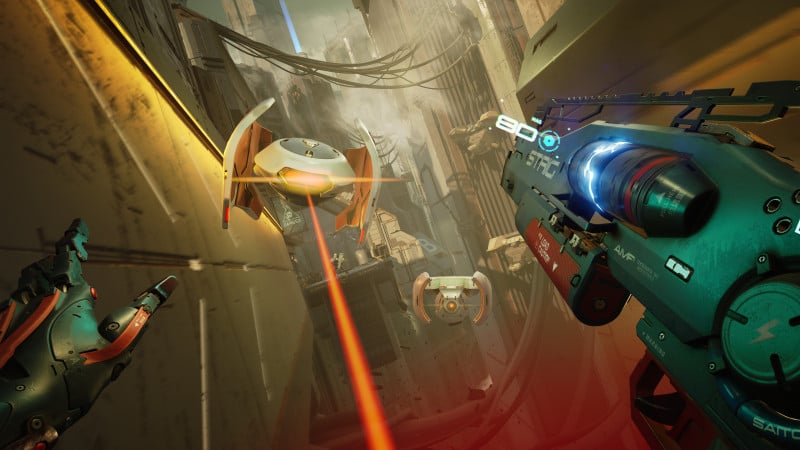
That stated, the motion was greater than sufficient to drag me by every mission, as I continuously seemed ahead to the following setpiece, the following weapon, and even the following improve station to make my shotgun or grenade launcher extra highly effective. Metallic Eden isn’t stingy with Mud, the forex used to improve weapons, present in canisters positioned all through ranges or given upon defeating enemies. By the point I completed the sport, solely considered one of my seven weapons wasn’t totally upgraded, and I recognize Reikon permitting me to unlock most of Aska’s potential within the first playthrough. Every weapon, whether or not it was the standard-issue submachine gun with limitless ammo however a temperature-related cooldown, the power weapon that melts enemy armor, or my private favourite, an assault rifle with a secondary fireplace choice that turns it into a robust sniper, proved helpful in fight. Firefights get so hectic that there have been numerous encounters the place I used each single weapon at my disposal, whether or not it was a strategic want or as a result of I ran out of ammo for one more gun.
Although I at all times loved the fight, I want it have been extra diegetic relatively than arena-based. My favourite moments have been when Metallic Eden channeled one other Poland-based studio’s recreation, Ghostrunner, to show linear sections into parkour runthroughs the place I wanted to kill enemies with fast precision to advance and preserve momentum. However many of the fight occurred after I entered a big area, and a random sci-fi voice informed me after I completed a wave and when one other wave was starting. These arenas are well-designed, with armor, well being, and ammo pickups strategically positioned about, and wonderful wall-running and grapple alternatives, too, however they nonetheless grew uninteresting. It doesn’t assist that the runs between these arenas have been usually the kind of fight encounters I really wished extra of.
Regardless, Aska solely grew to become increasingly more enjoyable to make use of all through Metallic Eden as I unlocked extra of my weapons’ potential and have become extra snug firing them whereas operating on partitions or grappling by the air, utilizing my jetpack to increase my airtime. Once I totally understood Aska’s set of weaponry and motion tech, and extra importantly, find out how to reap the benefits of each in fight, every subsequent encounter felt like an excessive dose of adrenaline.
Much like the narrative’s intrusion into the superb first-person gameplay, there have been a handful of instances in Metallic Eden the place ranges went vast, permitting Aska to morph right into a ball – sure, it’s very paying homage to Metroid Prime – the place you zap enemies and goal them with lock-on missiles. Whereas cool in concept, these sections are simply the worst, and rolling round as a steel ball by no means compares to the joy of first-person capturing, wall-running, and jetpacking by this dystopia.
All through my time in Metallic Eden, I couldn’t assist however think about simply how good a sequel I hope Reikon makes may very well be. It is a nice begin within the FPS style for the staff; its concepts are robust, and with refinement, Aska’s subsequent mission may very well be as wonderful because the Ghostrunner and Doom Everlasting adventures it’s clearly impressed by. Although the star of the present – its first-person capturing and motion – is typically weighed down by an overreaching narrative and boring morph ball sections, when Metallic Eden shines, it’s as vivid because the solar that sheds gentle on Moebius’ darkish underbelly.

