
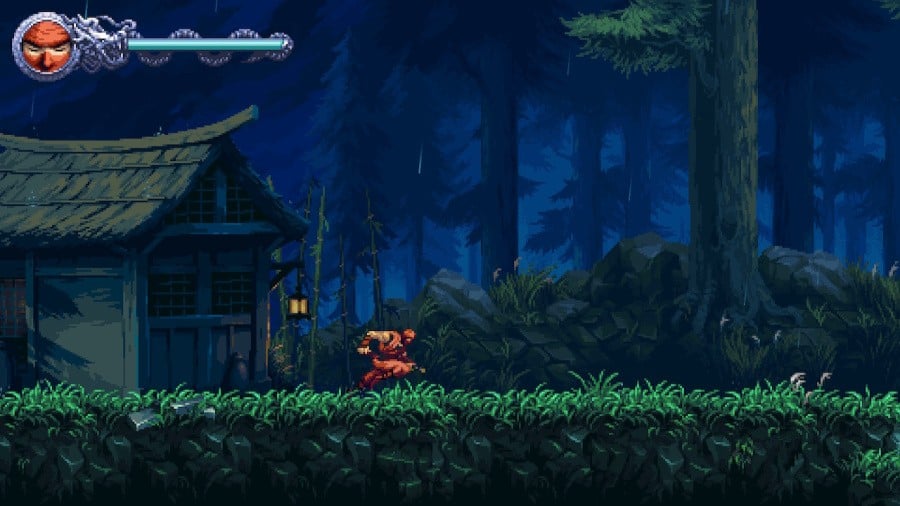
To return to Ninja Gaiden’s 2D roots in 2025 is an excellent factor. Dotemu, upon buying the license for a sequence reboot, approached Spanish indie developer The Sport Kitchen to get the job completed. Identified for his or her exceptional Blasphemous titles, the challenge was overseen by Crew Ninja, who’ve held the sequence mantle from 2004 to current. And, whereas Ninja Gaiden: Ragebound just isn’t strictly the Ninja Gaiden one remembers from its NES days, the duty right here has been carried off with all of the panache fashionable expertise can afford, leading to a blisteringly beautiful action-platformer.
For these sufficiently old, Ninja Gaiden was as soon as a formidable 8-Bit problem that both destroyed a baby’s willpower or solid them everlasting gaming mastery. It was, and nonetheless is, brutally arduous. Whereas Ragebound echoes this, in that it will get significantly difficult after its first third, its format is way much less aggressive. You don’t have lives, you will have checkpoints, and respawns are available an infinite flavour. You don’t have completely linear development, however a world map the place you may return to any substage to earn greater ranks, full mini challenges, or recuperate Golden Scarabs. When you’re not properly outfitted and your reflexes suck, nonetheless, the Pirate Stage boss may have you spitting tooth.
Ragebound’s plotting is heavy in comparison with the video games of outdated, with common cutscenes and dialogue exchanges between an extremely broad solid of characters. It takes place in parallel to 1988’s Ninja Gaiden, with a gap prologue the place you play Jō Hayabusa – Ryu Hayabusa’s father – who’s defeated in battle by its finish. Ryu, compelled to chop the coaching of a younger Kenji Mozu brief, heads to America to avenge his father’s demise, concurrent with the occasions of the unique NES recreation. Kenji, the brand new protagonist, is left behind to defend the village from a demonic invasion, and a brand new journey is on.
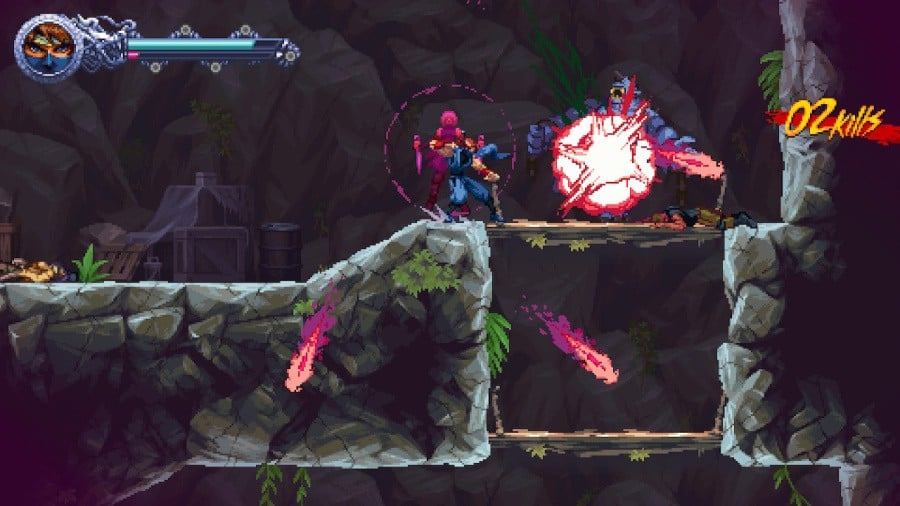
Visually, Ragebound is beautiful. The areas are different; not content material with idling within the mountains of Japan, it strikes with its plot, increasing into cities, subways and multi-tiered development websites. The color casting is phenomenal, the element unimaginable, and the animations fluid and sharp. Your demon adversaries, punched by way of in bursts of blood and an occasional decapitation, lie dispatched on the bottom whereas severed limbs of the opposing clan spin by way of the air. Whereas most sprites are comparatively small, they arrive imbued with luggage of visible persona and an timeless coolness.
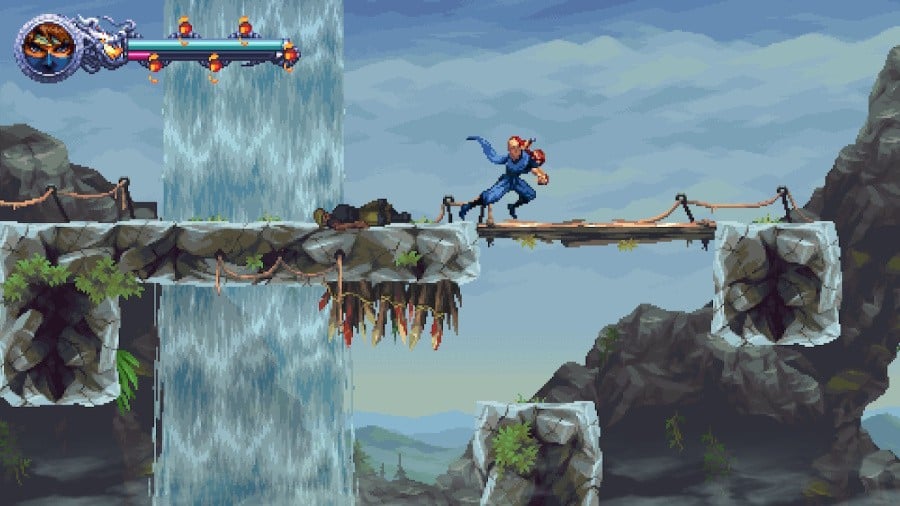
The aesthetic is cartoonier than Sega’s forthcoming Shinobi: Artwork of Vengeance, however properly fits the sequence canon. Fireplace rages, waterfalls cascade, rain patters, and sunsets set. Your entire factor, from finish to finish, is a feast for the eyes, roaming throughout glades, by way of pitfall-filled caverns, ominous bio-factories, and embellished company headquarters. Complimenting the visuals is a terrific rating, its rock-cinematic soundtrack oft recalling historic Ninja Gaiden motifs.
Fortunately, it performs fantastically, too, due to limber mechanics and finely crafted stage designs. The fight doesn’t really feel overburdened, even when your choices prolong through the recreation. Combining simplicity with depth, you will have an easy slash and a “Guillotine Slash”, which is carried out within the air by tapping the soar button a second time, encircling Kenji. The Guillotine Slash not solely kills or damages an enemy, however means that you can spring off of them, successfully a double soar. You may ping off of virtually something that may damage you, chaining hops throughout Shuriken, fireballs, and thick enemy skulls; and the added peak will increase you towards overhead platform equipment. Relying in your prowess, you can also make Ragebound look extremely good, snapping concerning the surroundings and dispatching enemies with a wide range of imaginative mixups.
Kenji can power-up at will by utilizing a average portion of well being, affording him a hyper strike that cuts by way of armoured enemies. Alternatively, this similar single-use power-up is carried by sure demons, denoted by a glowing aura, who’re nearly all the time paired on-screen with bigger, shielded foes. This creates a pleasant cadence the place you bounce and strike for the aura, power-up, after which violently lower by way of the larger foe like butter. Moreover, Kenji can slide-strike from a splash by utilizing the shoulder button in tandem, and, crucially, roll safely by way of incoming risks.
Checkpoints litter the pretty giant phases, that are break up down into substages, and act as respawn factors for dishonourable defeat. Throughout your travels you gather Golden Scarabs that may be traded on the store for Talismans, granting you new skills. Solely two may be outfitted at a time, including a strategic however versatile dimension to the gameplay; and with helpful properties like replenishing your well being everytime you cross a checkpoint, or growing your assault energy when near demise, they’re indispensable.
Bosses are brilliantly completed; usually large, monstrous issues that not solely look excellent, however deploy correct, sequenced assault patterns. Right here, your abilities – rolling, guillotine slashing, and powering up – are exercised in intelligent methods, and it feels rewarding to flex Kenji’s talent catalogue. Slaying twin serpents over a river of blood is a splendidly intense skirmish, and requires absolute sample memorisation and all your attributes to greatest.
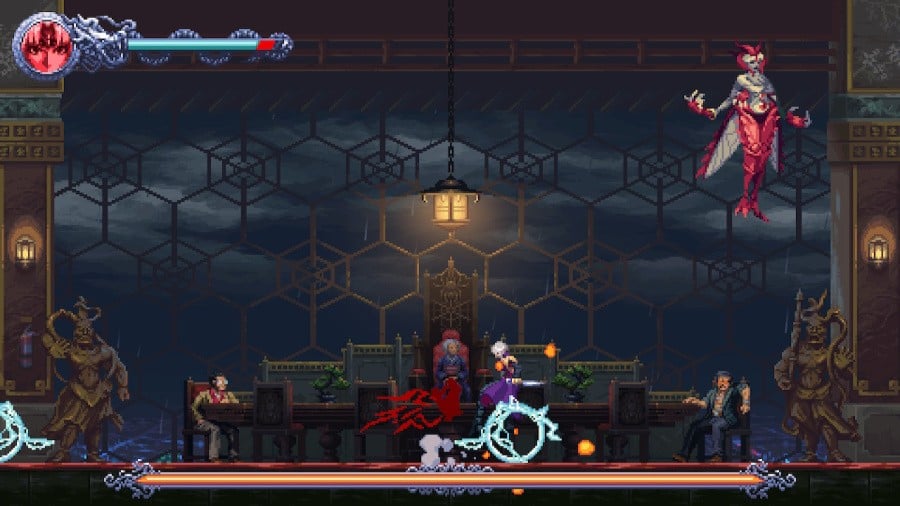
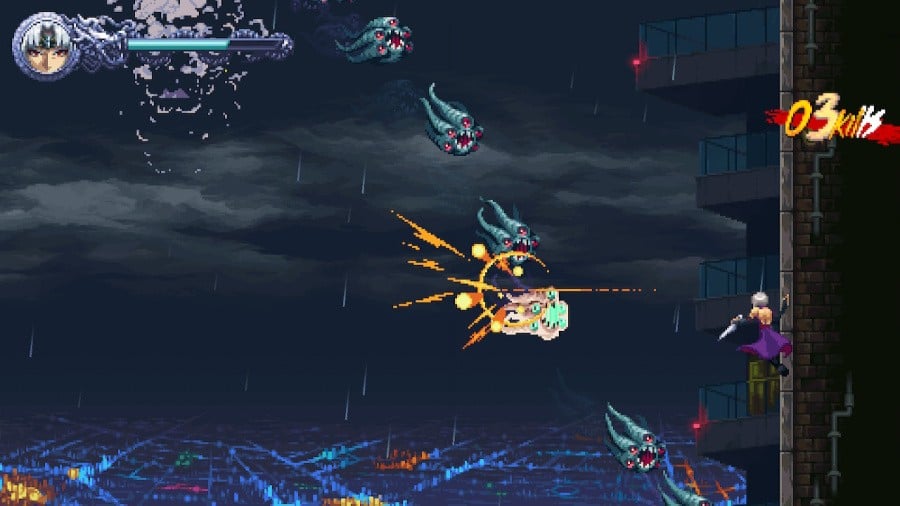
Ninja Gaiden: Ragebound is wherever between three to 6 hours in size relying in your capacity, but it surely’s not till across the hour mark that issues essentially shift, switching characters from Kenji to Kumori, a Black Spider Clan Kunoichi. A ranged character, she throws blades in 4 instructions and is extremely enjoyable to play. Neater nonetheless, she finally ends up not simply siding with Kenji, making for apparently hostile banter, however combines along with his physique. For the rest of the sport you’re graced with each character’s properties, lengthy and brief vary powers mixed. This provides a number of new quirks, requiring you to make use of every character’s skills to tag particular colour-coded, aura-wielding enemies, and a brand new Rage Meter that may destroy each on-screen adversary or bat chunks from a boss’s well being bar.
From this level, issues get actually creative. There are junctures the place Kenji should give over management to Kumori, who in spirit kind has a quick window to execute a sequence of actions, skipping and teleporting, to achieve a hidden merchandise, swap, or set off to can help you proceed by way of the stage. Her vitality meter ticks down quickly, that means she will make scant few errors in finishing the duty. Failure doesn’t end in demise, however a return to Kenji’s physique to start out over. It’s not a wholly novel gadget, however does add new definition to an already well-thought-out recreation; and, together with arcade-like motorcycle chases down subway tunnels, infiltrating Pirate Caves, and hitching rides on helicopters, it’s spectacular how a lot selection The Sport Kitchen have crammed into the journey.
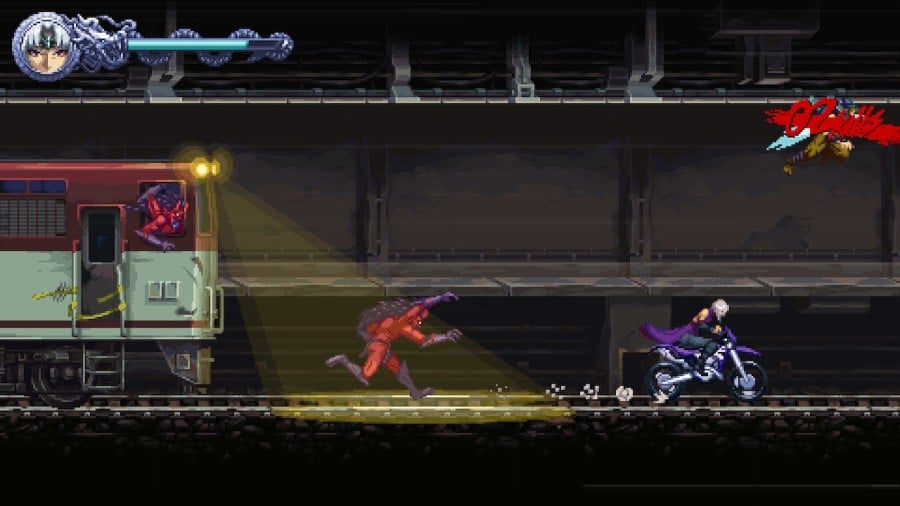
So the place’s the rub? Sadly, the body charge simply isn’t holding 30fps on the Swap 1, even when docked, with judders when there are as few as three on-screen enemies. It’s a disgrace, for the reason that Swap can ably deal with this. It is no dealbreaker, but it surely’s irritating, and hopefully it will likely be rectified in a future replace.

