
Sponsored By
ADVERTISEMENT
ADVERTISEMENT
BISMARCK – Invoice Haase is the brand new Wildlife Division chief of the North Dakota Recreation and Fish Division, changing Casey Anderson, who just lately was named the division’s deputy director.
Haase, who grew up in Colorado, moved at age 16 to Wisconsin, the place he graduated from highschool. Later, he graduated from the College of Wisconsin-Stevens Level with a wildlife administration diploma. After working for the state of Minnesota for a few years, Haase moved to North Dakota and has been with the Recreation and Fish Division for 22 years. He began his Recreation and Fish profession in Fisheries Improvement earlier than switching to the Wildlife Division 14 years in the past, the previous 4 as assistant wildlife chief.
ADVERTISEMENT
Haase, who formally began his new job Monday, July 14, talked with Herald outside author Brad Dokken in regards to the place and a few of the points, challenges and alternatives he faces as wildlife chief.
Right here is an edited transcript of their dialog.
BD: As wildlife chief, how does your day-to-day routine change from being assistant chief?
BH: That’s a great query. I believe within the quick time period, one of many huge issues is filling my (assistant wildlife chief) place, and so we’ve that announcement out till Aug. 3. We’ve some actually excellent candidates internally, however we’ll have that open for inside and exterior employees as effectively.
In any other case, truthfully, Casey and I labored hand in hand along with loads of the work that we did, and so loads of the duties for me received’t essentially change that a lot.
I suppose the largest change most likely could be as assistant chief, I primarily handled our employees in points and challenges right here in North Dakota. Because the wildlife chief, I’ll be concerned with much more of the nationwide (points and organizations), as effectively.
BD: What drew you to North Dakota – and what has stored you right here?
ADVERTISEMENT
BH: It’s searching and fishing. I might all the time come go to right here even once I lived in different states, and that’s what drew me right here. It was a great job alternative, and why I stayed. The Recreation and Fish Division is an impressive place to work. It’s nice folks; they’re devoted, hard-working. We’re all in it for a similar causes – to supply nice searching and fishing entry and sources for our state.
BD: From a wildlife and a searching perspective, what are the largest challenges going through the division?
BH: Habitat and entry is our greatest problem proper now, and it’s one thing that’s all the time sort of been the case, but it surely’s perhaps slightly extra prevalent now than it was previously.
We did have that habitat and access summit final 12 months, and that did create loads of actually good concepts from our constituents. We heard loads of good high quality ideas and feedback and so we’re following via with loads of these ideas, and it’s actually going to remain the identical. After which additionally, wanting on the entry aspect of issues. That is likely to be using the e-posting platform for opening up some areas. It is likely to be taking a look at a managed entry program that’s perhaps not simply PLOTS (Non-public Land Open to Sportsmen). So, we’re exploring loads of totally different choices to attempt to enhance the entry, after which additionally loads of totally different applications to enhance the habitat.
BD: There have to be some brilliant spots, as effectively.
BH: Having lived right here for 22 years, I bear in mind 22 years in the past what (searching) was like, but it surely’s nonetheless fairly darn good, general. You may exit and shoot a restrict of pheasants regularly, goose searching and waterfowl searching are excellent. There’s simply loads of actually good searching and good alternatives on the market.
Elk numbers are as excessive as we’ve seen them, to the purpose the place perhaps, it’s virtually an excessive amount of for some landowner tolerance on the market. However that’s a great factor. That’s been successful story.
ADVERTISEMENT
BD: I noticed waterfowl numbers are down.
BH: Our duck numbers have been declining, attending to the purpose the place we’re involved that within the close to future, we might change to a extra conservative bag restrict. That’s finally decided by the U.S. Fish and Wildlife Service, however we’ll see.
BD: Deer licenses had been down once more this 12 months and a few folks, I do know, are involved about conserving younger folks searching as soon as they’re previous the age of drawing youth season tags. How can that difficulty be addressed?
BH: Youth searching in North Dakota for deer has been on the rise 12 months after 12 months. And so annually, we’ve set a document for the variety of youth antlerless licenses that we’re offering. And so the curiosity is little doubt there, with the participation there. However at this cut-off date, our deer inhabitants, particularly in that japanese third of the state, may be very low, and our tag allocation is low.
The most important factor, I believe, is searching is extra than simply deer searching and gun deer searching. There’s much more alternatives for youth than simply that. It’s an ideal exercise, however we’re encouraging mother and father and folk to develop that. Take them pheasant searching. Take them waterfowl searching. Take them spring turkey searching – that’s extraordinarily enjoyable for a brand new hunter.
BD: What different points are on the horizon?
BH: I believe one of many greatest issues is nonresident waterfowl hunters. There are some issues with that from folks, and so there will probably be some modifications approaching the nonresident aspect. This (governor’s searching) proclamation, they’re going to be restricted to at least one unit. We’ll have six totally different items within the state, so it’ll be slightly totally different system for them.
ADVERTISEMENT
We aren’t going to have a cap at this cut-off date, however we’re within the means of gathering extra info, actually studying the place these hunters are going and their preferences, and see if we are able to unfold them out over the panorama slightly bit higher.
The opposite one might be deer license allocations, and it’s a product of lack of habitat on the panorama. There’s been a bit of dialogue in that regard, questioning if there must be some modifications to, say, a system the place perhaps there’s a one-deer system or one thing to that impact. (Hunters at present should buy an archery tag over-the-counter and probably draw a rifle or muzzleloader tag, as effectively.)
From a division standpoint, we aren’t essentially pushing one factor or the opposite with that.
It simply comes down to produce and demand. If we’ve sufficient deer on the panorama, all that goes away. Once we begin to get to those ranges, if that is our new norm, then we’re most likely going to have to speak about that slightly bit extra.
BD: How would you say the state is doing when it comes to managing persistent losing illness?
BH: Up to now, we’ve been very profitable. It’s been a sluggish trickle into the state. The northwest aspect, (unit) 3A1, we actually have a prevalence stage up there that’s beginning to be a priority. And so this 12 months, we’ll be surveying that northwest nook of the state. It’s been 4 years since we had been there. We’ve had some samples up there, however not giant samples. However the small pattern measurement we had is the prevalence in mule deer bucks has been rising in that northwest nook.
In any other case, 3F2, actually it’s been there for some time, and it’s slowly trickled out. It’s transferring throughout the state, however at a really sluggish fee, and so hopefully that continues to be the case into the longer term.
ADVERTISEMENT
BD: The Legislature handed SB 2137, which permits putting bait for searching on personal land even in CWD administration areas the place baiting beforehand was restricted. Does that change how Recreation and Fish manages CWD?
BH: No, truthfully, it actually doesn’t. We’re going to nonetheless monitor the identical approach we’ve. We’ll survey a fourth of the state annually. We’ll monitor the prevalence of the illness. We’ll nonetheless work on educating folks about carcass components. Being good in regards to the disposal of these high-risk carcass components – spinal twine, brains, issues like that – reminding those that they need to put these in a landfill or preserve them onsite.
BD: Any ideas on opening a bear season in North Dakota?
BH: It’s one thing that we’re beginning to focus on. I don’t know if we’re going to have a searching season, but it surely does seem that there’s extra bears than there have been previously.
BD: What’s your preferrred approach to spend a day within the area?
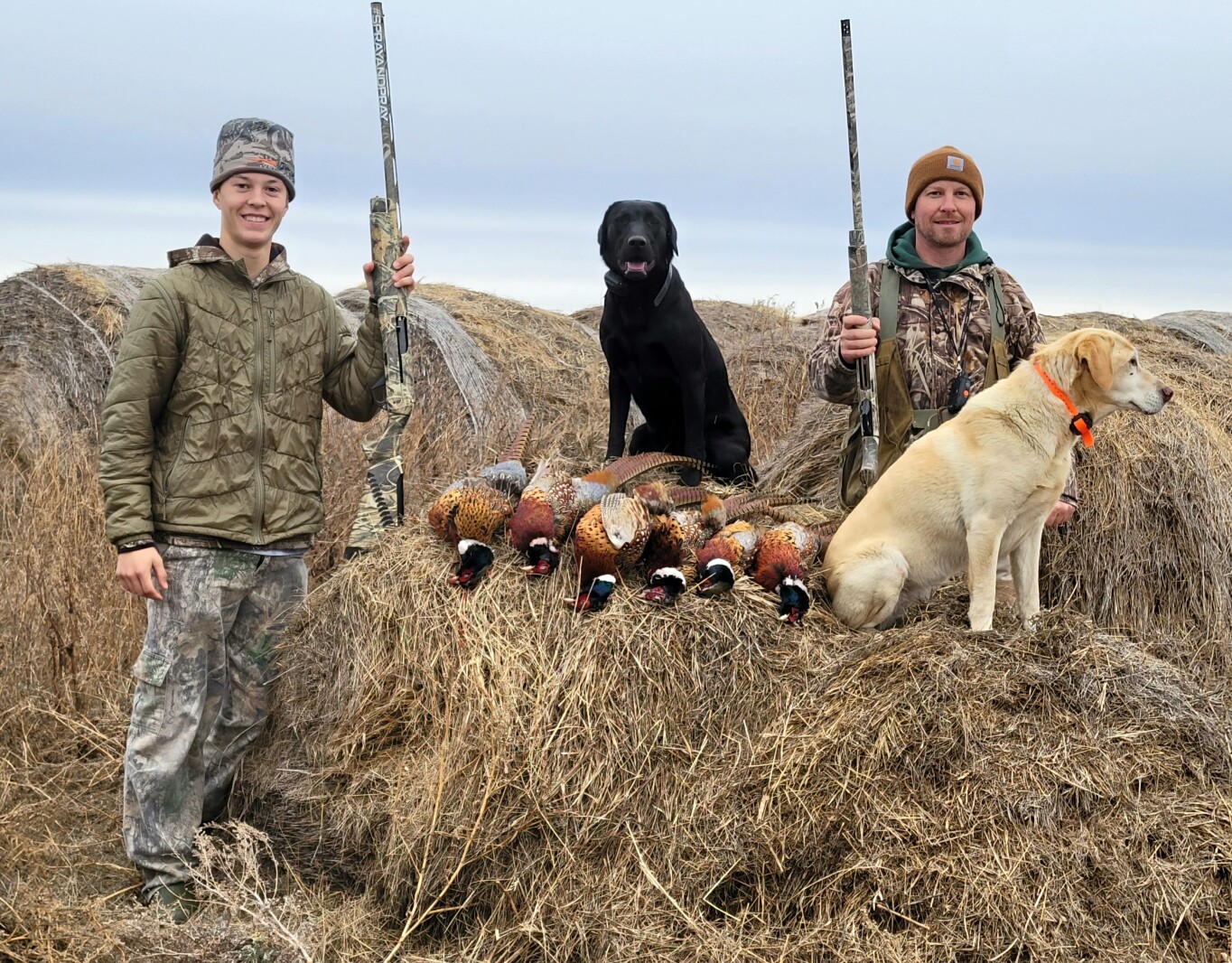
BH: The best day could be spending time within the area with my canine and my boys pheasant searching. Possibly begin the day waterfowl searching, after which after we’re completed with that, go pheasant searching after which finish the day bow searching. I can’t hunt sufficient, and I like spending time with my children and my household within the area, after which additionally my associates. And so, to me, that’s preferrred, and that’s what makes North Dakota nice.
ADVERTISEMENT
ADVERTISEMENT
